Background. Circulating tumor DNA (ctDNA) analysis has emerged as a promising tool for the management of pediatric central nervous system (CNS) tumors. However, implementation remains concentrated to a relatively limited number of specialized centers with established clinical research infrastructure and sequencing expertise. Many pediatric neuro-oncology programs face substantial barriers to developing similar capabilities, limiting broader participation in and contribution to liquid biopsy research.
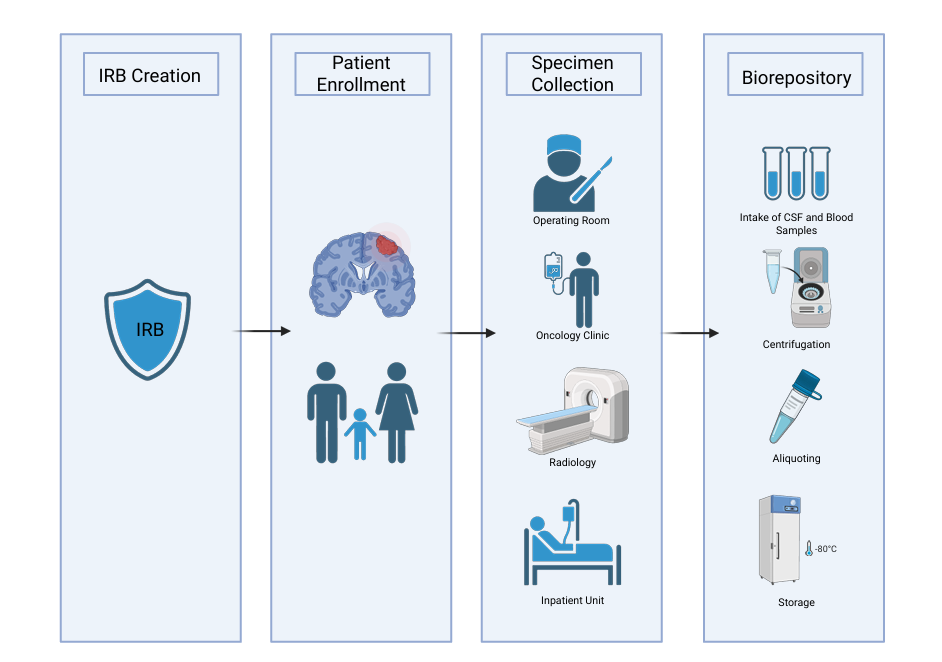
Methods. We describe the development of a pediatric CNS ctDNA program at a quaternary children’s hospital with limited research infrastructure and genomic testing capabilities. Key elements include protocol development, Institutional Review Board approval, patient identification and enrollment, longitudinal blood and cerebrospinal fluid (CSF) collection workflows, specimen processing and storage procedures, and partnerships for molecular sequencing and analysis.
Results. Fifty-seven patients were enrolled over four years, resulting in collection of 417 longitudinal blood and cerebrospinal fluid samples. Standardized workflows for enrollment, specimen collection, processing, storage, and clinical annotation were successfully implemented. Strategic funding facilitated stability of a sample biorepository. Successful implementation required coordination among a multidisciplinary team spanning clinical care, research operations, laboratory sciences, and institutional administration.
Conclusions. Development of a pediatric CNS tumor liquid biopsy program is feasible at institutions without extensive pre-existing liquid biopsy infrastructure. Structural, operational and cultural barriers can be overcome by establishing standardized collection workflows, multidisciplinary collaboration, and external partnerships. Our experience provides a practical framework for other centers seeking to participate in pediatric CNS tumor liquid biopsy research.